

One of the most impressive and interesting 'nuraghes' in the whole Sardinia
Nuraghe Santu Antine: Exploring the Path of Santu Jacu with Syusy Blady
A new slow journey through Sardinia begins with Syusy Blady
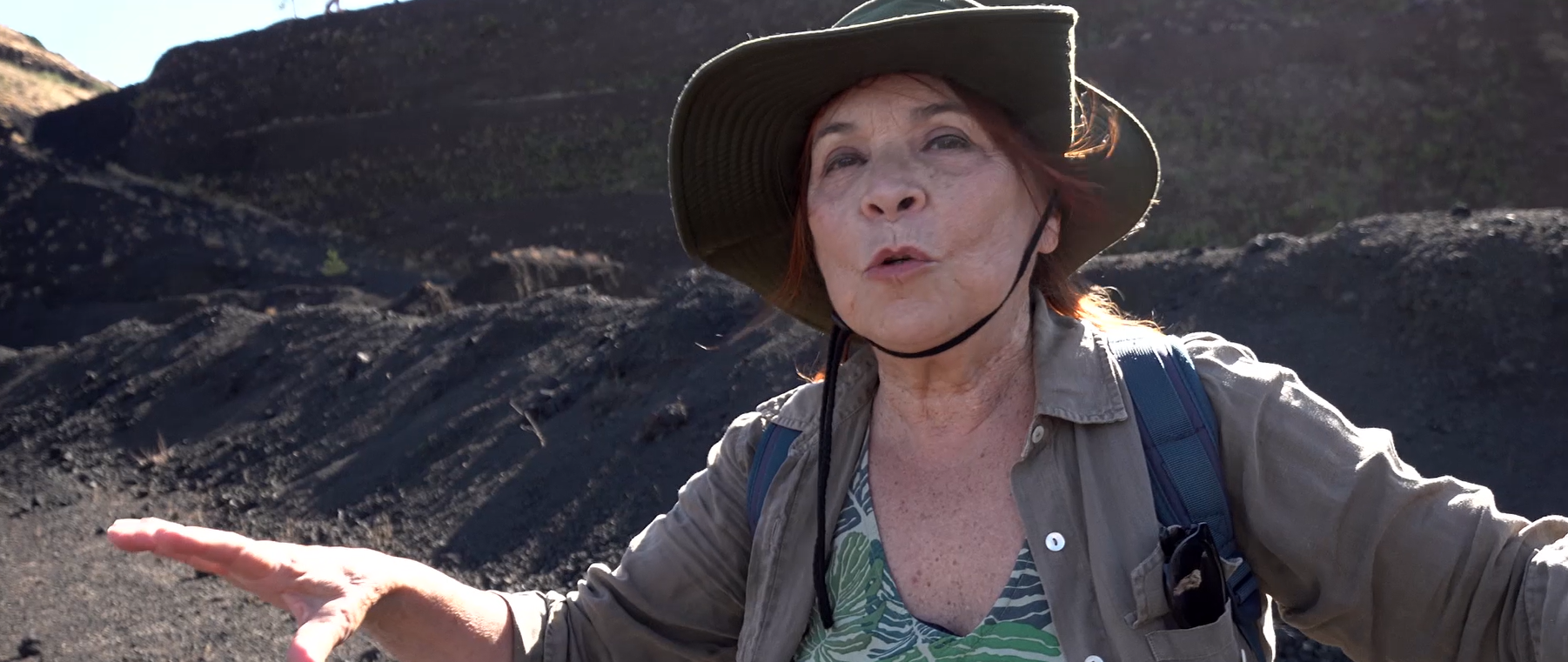
The journey we are about to share with you, “Slow Tour Sardinia”, follows two of the many walking routes that criss-cross Sardinia: the Path of Santu Jacu and the Path of 100 Torri.
The Path of Santu Jacu is a 450-kilometre route running from Cagliari to Porto Torres, following in the footsteps of the devotion to Saint James the Greater. The Cammino 100 Torri, meanwhile, winds its way around the entire island for 1,284 kilometres, linking around one hundred defensive towers and fortifications built during the period of Spanish rule.
But wait a moment. Before we go any further, let’s make one thing clear: Syusy won’t actually be walking. This is not a hiking guide, and you won’t find an account of a walking experience here, with details about the number of stages or places to eat, rest and stop along the way. You can find this practical information, for example, at https://noicamminiamoinsardegna.it/cammini/.
What you will find here is a journey through some of the key places along these two routes – including a few short detours. Places that matter because they tell us something essential about Sardinia’s identity.
And it was precisely Sardinia’s identity that Syusy set out to explore.
So, if you have already decided to embark on the Path of Santu Jacu or the Cammino 100 Torri, we hope these episodes will help you read the landscape you will encounter along the way, and discover the many layers of history it holds.
Or perhaps watching them will inspire you to set off on your own journey, and discover a lesser-known side of Sardinia, one that can be explored all year round, even outside the summer season.
In Sardinia, there is no sea
When Syusy asks archaeologist Franco Campus – who acts as her guide in the second part of the first episode – the question, “How would you define the true spirit of Sardinia?“, Campus replies with the words of writer Marcello Fois: “In Sardinia, there is no sea.“
Sardinia is an island of mountains, not just coastlines and sea. The sea is for tourists! It is in the inland areas that the island’s age-old culture and traditions reveal themselves.
A greeting to the rural Church of Santu Jacu and the Giant’s Tomb of Sa Pedra Longa
Our journey begins in Ittireddu, in the province of Sassari, but its starting point lies further back in time: when this piece of the Earth’s crust, which is now an island, broke away from the mainland and underwent volcanic activity lasting millions of years, which shaped it into the land we see today.
Just outside the village of Ittireddu, along the Path of Santu Jacu, stands Monte Lisiri, the last volcano in Sardinia to become extinct. The landscape still bears unmistakable traces of its volcanic past.
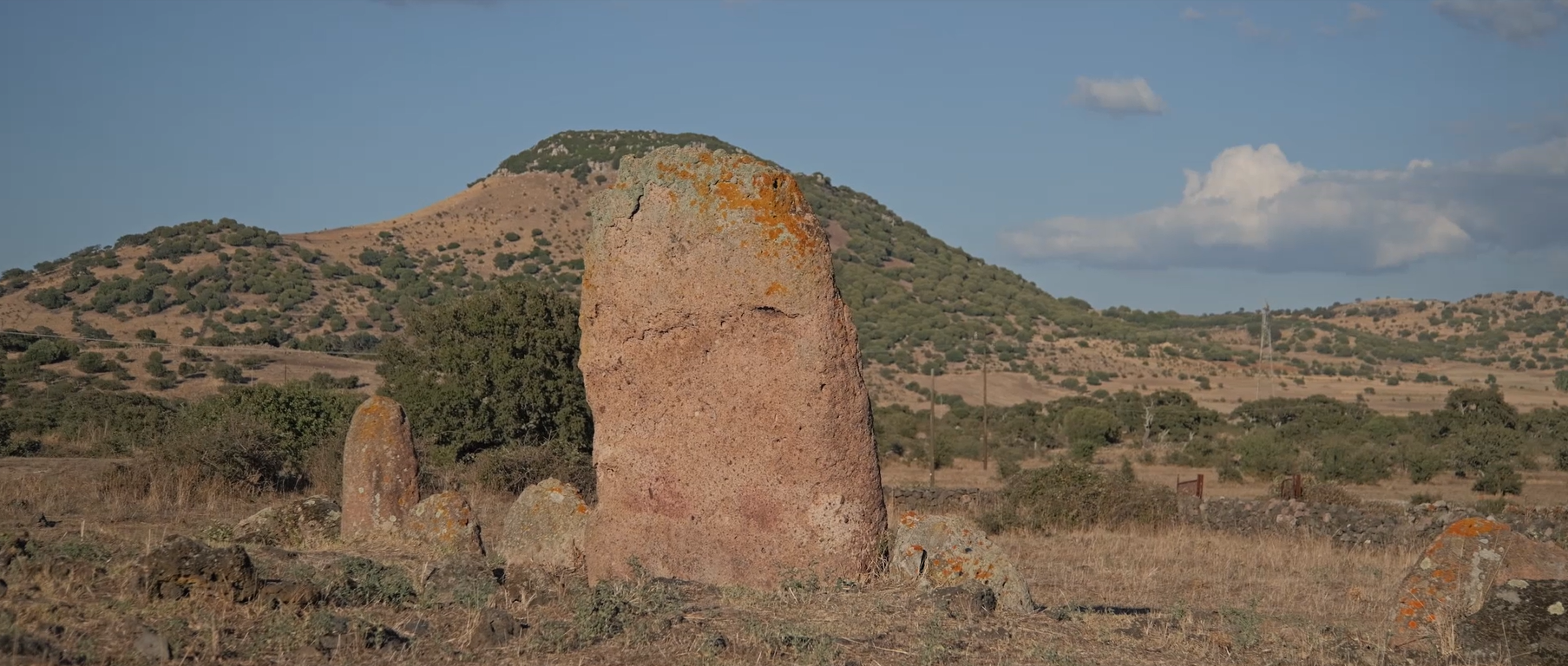
In Ittireddu, Syusy briefly greets the rural Church of Santu Jacu before setting off again. In the territory of Torralba, about 100 metres from the local road connecting the village with Bonorva and Foresta Burgos (near kilometre marker 5.3), she stops at Sa Pedra Longa, the Giant’s Tomb…
The Nuraghe Santu Antine
And here we are: the destination of this first episode. Nuraghe Santu Antine, in Torralba, is spectacular even at first glance, Syusy remarks.
Nuraghe Santu Antine is the nuraghe: the ultimate expression and crowning achievement of Nuragic architecture, and a cornerstone of the entire settlement system of the Valle dei Nuraghi (Valley of the Nuraghi). A majestic structure that brings to mind Mycenae and Tiryns…
And yet the nuraghi are the extraordinary creation of a people who once lived in Sardinia. Syusy and archaeologist Franco Campus retrace the milestones of this long history and explore Nuraghe Santu Antine.
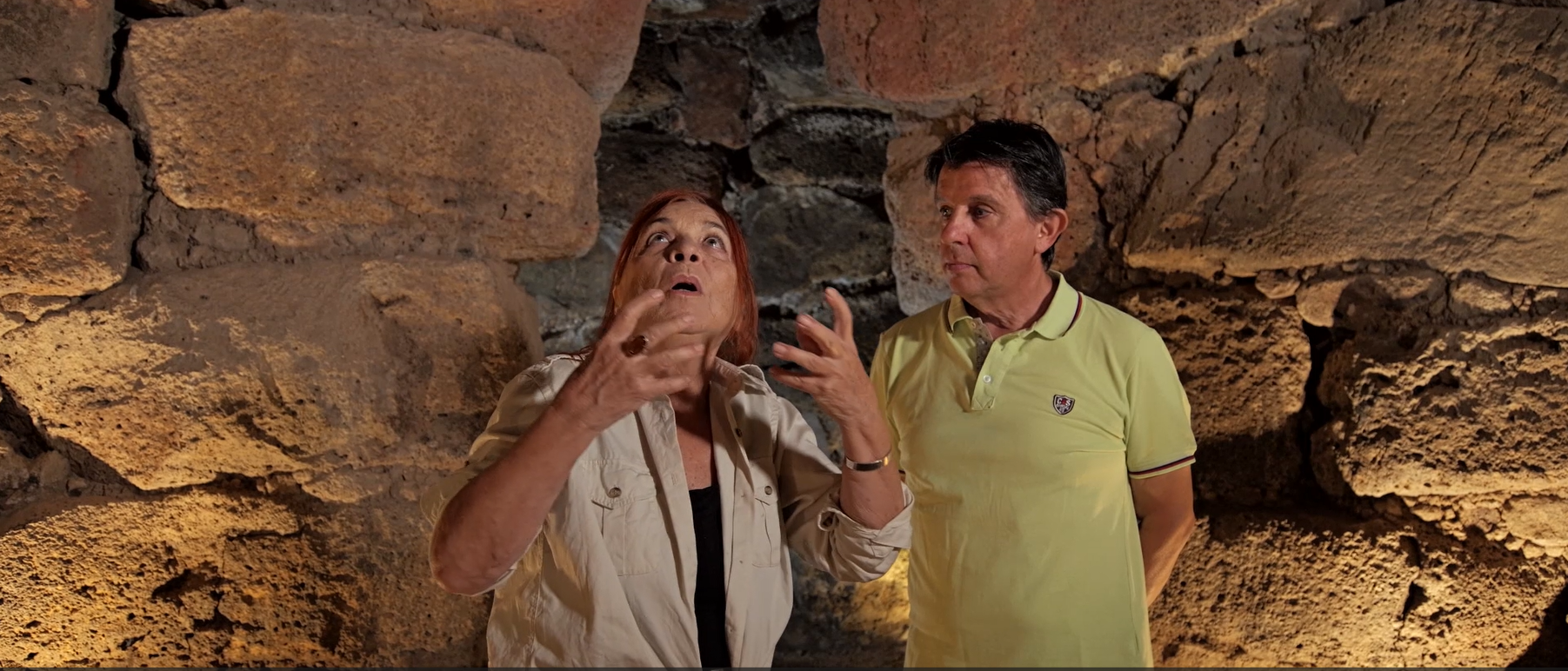
Watch the first episode 👇